
Thoughts on the Hopkins Strategy
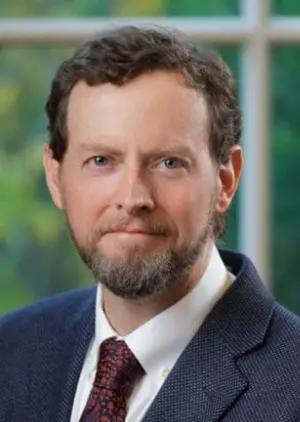
By Benjamin Storey and Jenna Silber Storey
August 26, 2026
The Chronicle of Higher Education just published an interview with Johns Hopkins President Ronald Daniels. It highlights among other things the cooperative projects that scholars at AEI have been working on with Hopkins since 2023. In that interview, Daniels explains why he thinks the partisan skew of the professoriate is a problem, and how he has supported efforts at Hopkins to address it.
According to Daniels, the primary problem is not that most professors are “tenured radicals” bent on indoctrinating their students. It also isn’t that they aren’t doing meritorious work, or that they are inappropriately politicizing academic inquiry. The primary problem, as Daniels says, is that the academic profession “has systematically excluded faculty whose scholarship, whose intellectual framework, is conservative in orientation.”
As a result, “the left gets flabbier because it’s not being tested and challenged.” The right “becomes more radicalized” because it is excluded from the university and therefore does not engage with the best arguments from across the political spectrum.
How does one address such a problem, which gets entangled with the very “methodologies and questions” by which university departments and academic disciplines define themselves? The Hopkins strategy is to focus on institutional innovation and program building.
At Hopkins, efforts to redress the partisan skew of the faculty began with the creation of the SNF Agora Institute in 2017. That was followed in 2023 by the creation of the new School of Government and Policy, which will begin accepting applications next year for its first class of students beginning in fall 2028. Both SNF Agora and the School of Government and Policy are committed to putting faculty with different political perspectives into conversation with each other.
As entirely new academic units, SNF Agora and SGP can escape the path-dependency of long-standing departments. They can thereby bring scholars to campus who can eventually “broaden the aperture for appointment,” as Daniels puts it, within the traditional departments themselves.
But changing the makeup of the professoriate is a generational endeavor. It must involve encouraging more young people who seriously entertain questions and hypotheses that are typically at home on the political right to see themselves as potential faculty. That is why Daniels has supported JHU Professor Steve Teles’s work with AEI’s Jenna Storey to found the Graduate Student Intellectual Diversity Initiative.
This initiative has gathered professors in the top 20 departments of Political Science to serve as mentors for such students, and has begun helping them take the first steps toward academic careers. That program is presently seeking a new executive director to allow it to expand into other fields.
Another initiative Hopkins has started with AEI scholars, the Fellowship Exchange Program (FEP), offers a more immediate way to redress partisan skew. The FEP is a competitive grant program that supports JHU Professors and AEI Scholars who want to engage in coteaching, co-research, and other collaborative endeavors. In its first year of operation, it has sponsored fifteen co-directed projects, and has already led to the publication of a forthcoming article in the Journal of the American Medical Association and a unique course on liberal education.
Both AEI and JHU benefit from this program, which broadens the ideological range of both of their conversational circles. It also brings together scholars who work in different kinds of institutions, where intellectual life is shaped by different structural incentives. It thereby helps AEI scholars encounter professors as individuals rather than statistical aggregates, and gives JHU academics a reason to engage with scholars who have chosen to do their work outside the faculty guild.
Whether the Hopkins approach will help create the systemic change we think the academy needs to recover public trust remains an open question. “The hiring and recruitment process remains vested with the department[s],” Daniels notes. And some faculty at JHU believe, however implausibly, that JHU’s cooperative endeavors with AEI are a part of a bad-faith “MAGA plot.”
The Chronicle’s Evan Goldstein, who conducted the interview with Daniels, echoes that charge. Alluding to the 2025 Conference on “Civic Thought and Practice” co-hosted by JHU and AEI, Goldstein suggests that there is something suspect about the JHU faculty who were willing to take part in an academic gathering with faculty from red-and-purple state public university Civic Thought programs such as Ohio State’s Salmon P. Chase Center or the University of Florida’s Hamilton School. Such framing, all too common in higher ed journalism, indicates to faculty that they may pay a reputational price for getting caught on the wrong side of the ideological fence—or even peering over it in curiosity.
Daniels has faced similar charges. The American Association of University Professors described his willingness, as vice-chair of the Association of American Universities, to provide feedback on the language of Education Secretary Linda McMahon’s recent “call to action” as collaboration and “an unconscionable dereliction of duty.” But as Daniels remarks, to most people, it is “inconceivable” that America’s university leaders would refuse to engage in conversation with “the government elected by the citizens of America.” Seeking to work “constructively” with the administration “where there is legitimate criticism and a need for reform,” while pushing back in areas where “the case for reform is weaker,” and even litigating when necessary, seems like decency, responsibility, and common sense.
We have supported Daniels’s strategy in the hope that a critical mass of faculty, at Hopkins and elsewhere, do not agree with the AAUP or the faculty voices that echo its views. And we personally have encountered many faculty, of highly varied disciplines and outlooks, who want to move past ideological gatekeeping, improve their disciplines, and regain public support by broadening the academic tent. We hope the Hopkins strategy is effective in helping them do so.
Benjamin Storey
Jenna Storey